Guide
Viking Serial Number Lookup: Model, Series and Age
Where to find the rating plate on a Viking range, oven, cooktop or refrigerator, how to read the model and serial numbers, and why a technician asks for them.
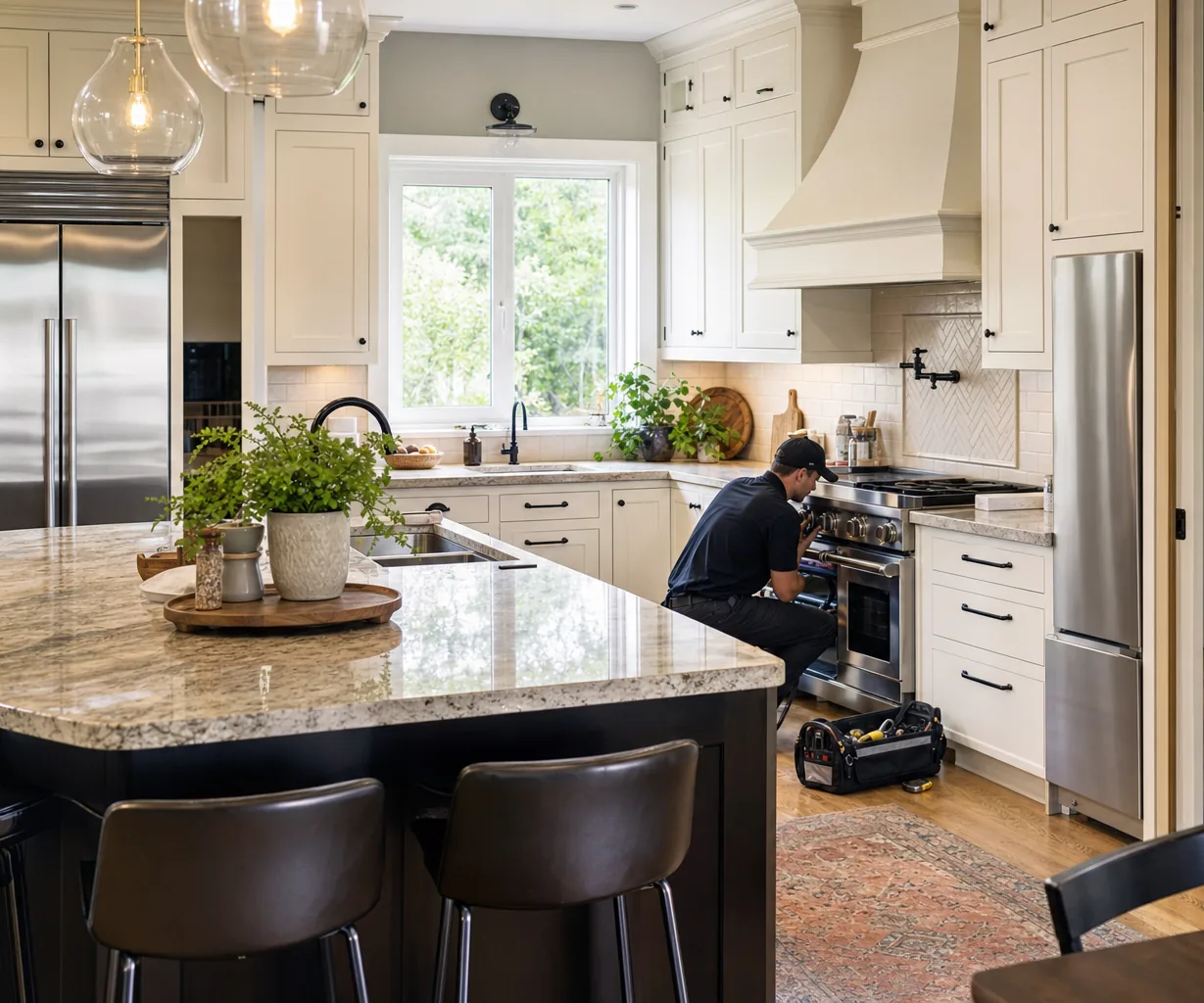
A Viking serial number lookup starts at the rating plate, a small label that carries the model number and the serial number together: on a range, check behind the bottom kick panel and around the oven door frame, and on a built-in refrigerator, check inside the fresh-food section near the top. Finding it usually takes under 5 minutes with a flashlight, and those two lines tell you the product series (3, 5 or 7), the configuration and roughly when the unit was built.
Take a clear phone photo of the whole plate. One wrong character can point to a different product, and the photo also captures the gas type and electrical ratings.
Where is the serial number on a Viking appliance?
The exact spot varies by product type and production era, so check these places in order:
| Appliance | Check first | Check next |
|---|---|---|
| Freestanding range (gas or dual fuel) | Behind the removable kick panel or storage drawer at the base | Oven door frame and side trim, with the door open |
| Wall oven | Frame around the oven opening, with the door open | Behind the lower trim or vent panel |
| Cooktop or rangetop | Underside of the chassis, seen from the cabinet below | The installation manual or a duplicate label in the paperwork |
| Built-in refrigerator | Upper side wall or ceiling of the fresh-food section, near the light | Behind the bottom grille |
| Wine storage unit | Inside side wall, near the top | Behind the lower grille |
On most units the plate can be reached from the front. Don’t slide a range out to look at the back; the gas connection and anti-tip bracket are there, and a heavy pro-style range can damage the floor or the line.
How do you read a Viking model number?
The model number describes the design, not your individual unit. On many current Viking cooking products it begins with a short letter prefix for the product type and fuel (on ranges, G typically marks gas and D marks dual fuel), followed by the series digit, then digits that usually include the width in inches. Letters at the end often indicate the finish, such as SS for stainless steel.
The series digit is what people mean by the Viking 3 Series or 5 Series:
- 5 Series is the classic Viking Professional line, the commercial-style look most people picture.
- 3 Series is a simpler, lower-priced line with fewer pro features.
- 7 Series is the top tier, with the most premium burners and features.
Older Viking Professional units built before the numbered series names use different prefixes, so a model number with no series digit usually points to an earlier generation. The series matters for repairs because two Viking ranges of the same width can look nearly identical yet use different burners, igniters, knobs or control boards.
Can you tell a Viking’s age from the serial number?
Partly. The serial number identifies your unit and its production run, but the format has changed over the years, and no free online decoder reliably covers every Viking generation. Treat any date from a forum decoder chart as an estimate.
More dependable ways to pin down the age:
- Look for a build date printed on the rating plate; some plates include one.
- Check the original invoice, the kitchen designer’s appliance list or the home inspection report.
- Ask Viking’s customer support, which can usually match a serial number to a build date.
Age changes the repair conversation: on an older unit, some original parts may have been replaced by updated versions that need an adapter kit.
Why does the technician need the model and serial number?
The numbers turn a guess into a parts list. With them, a technician can:
- Order the right parts. Igniters, bake elements, valves, fan motors and control boards changed across production runs, even within one series.
- Confirm the gas type. The plate shows whether a range or cooktop is set up for natural gas or LP (propane), plus its BTU and electrical ratings.
- Check for updates and recalls, which are tracked by model and serial range.
- Sort out warranty coverage. Work under the manufacturer’s warranty goes through Viking; we are an independent service, not manufacturer-authorized.
Having the numbers ready when you book lets us check likely parts before the visit. A diagnostic visit is a typical $95–$149. Common range and oven repairs typically run $250–$900, and refrigerator repairs for common faults run $300–$750. These are typical ranges; the firm quote is given on site after diagnosis. See repair pricing for more.
What if the rating plate is missing or unreadable?
Range plates sit close to heat and grease, so over the years they fade, peel or get scrubbed off. In shoreline homes along Long Island Sound, near Fairfield Beach or Southport, damp salt air adds to that wear on metal trim and labels. If yours is hard to read:
- Shine a flashlight across the plate at a low angle; stamped characters often show up that way.
- Don’t scrub it with solvent or an abrasive pad.
- Check the owner’s manual, registration card or original invoice.
- If nothing survives, a technician can often narrow down the series from the burners, controls and internal component labels.
Frequently asked questions
Are the model number and serial number the same thing?
No. The model number names the design, such as the series, fuel type and width, while the serial number identifies your individual unit and its production run.
Is a Viking 3 Series repaired the same way as a 5 Series?
The diagnosis follows the same logic, but many parts are specific to the series and production run. That is why the technician needs the full model number before ordering anything.
Do I need the serial number to book a repair?
No, but it helps. Call (475) 472-9274 with the model and serial numbers, or a photo of the rating plate, ready so the right parts can be checked before the visit.